I realize that so many Americans, even staunch Republicans, are angry with President Bush. I'm sure that many readers here will not agree with what I am about to write. But this is my blog and I have the right to express my own opinion.
First, I will state that I do not agree with everything President Bush says, does, or has done. This is just a short list accompanied by very brief explanations of policies and actions of the Bush Administration that I strongly disagree with:
1. Not enforcing the borders against illegal immigration.
2. Forcing Israel to give up land to the Palestinians, and trying to broker peace through too many Israeli concessions.
3. The terrible idea of a "North American Union."
An entire detailed essay could be written about each item on the list. However, for the purpose of this blog post, I want to focus on the one issue (though many Conservatives, Republicans, and even fellow Christians may disagree with) where I think that Bush got it right.
I must admit, it was gratifying to hear several of the Republican nominees for president give President Bush and General Petraeus credit for the success of the troop surge in Iraq.
Have you noticed that the MSM is not even mentioning Iraq much anymore? Why is that?
And, where are the anti-war naysayers now? Guess they are finding it difficult to protest against the successful surge...eh?
Could the MSM silence about Iraq be because they don't want to report that the surge is working? Of course, we know that the MSM hates President Bush to much to EVER give him credit for ANYTHING!
I haven't watched many moments of the Democratic debates, but I doubt that the successful mission of the troop surge ever comes up.
This morning, I found myself delving into history a bit as I replied to a comment on this blog (that was posted on January 3rd) to an older post (written and posted on Thursday, November 30, 2006). The original post is
here.
The discussion in the comment section obviously veered off of the original topic. However, once I was done doing some article research in order to answer the commenter named "Mike," I found myself wanting to re-post it here for all to read.
Ultimately, I believe that history will one day be much kinder towards President Bush's handling of the war in Iraq than the MSM ever was, or will be. Despite mistakes in the past, the decision to appoint a new Secretary of Defense and send General Petraeus in to bring us closer to victory in Iraq will go down in history as a brilliant and successful military move.
History has shown that errors in the past (especially where the Vietnam War is concerned) should serve as a lesson not to repeat such errors again.
The following is a combination of commentary, articles, plus an excerpt from a book which I think shows how very damaging the war protesters of the Vietnam era were. It is for the similar reasons that I think the anti-war crowd has done huge damage against our brave troops efforts in the Iraq war. Their dissenting rhetoric was so virulent at times that I think it is one of the reasons why America is perceived as "the bad guy" in this war against terrorism. There are too many variables to discuss and get into here, in this post. But I will say this. The 9/11 conspiracy theorists also did much damage to America's image around the world. In my mind, both of these examples show just whom is REALLY responsible for pushing a bad image upon the minds of people of other nations.
For now, I want to focus on the anti-war protesters. History will show that Al Qaida terrorists, insurgents, the Taliban and other terrorist groups and supporter all deserve to be included in the #1 group responsible for deaths in Iraq and Afghanistan. One day, history will probably show that the anti-war protesters deserve to be labeled as the #2 group of people who deserve to be held accountable for many of the deaths (including American, coalition, and Iraqi deaths) suffered in the war. Why? Because of their vile, deceiving, Bush-hating rhetoric that gave aid and comfort to our enemies.
Apparently, this concept written in that Nov. 30th, 2006 article was what bothered the commenter the most. Here is what he wrote:
Mike said...
"Cowards and enablers of the terrorists! This is whether they believe it or not."
First of all, I think you could start by asking Cheney and Bush why they didn't feel the call to serve (or why virtually no children of our leaders are in Iraq). Coward would seem apt for anyone who had "other priorities"
But that would require honest examination of the people who spout this nonsense. Seems unlikely.
January 3, 2008 10:12:00 PM PST
My answer:
Christinewjc said...
Mike,
Here is the entire paragraph as it was originally written:
"In fact, I believe that history will one day show how the war protesters, the MSM, and the Vietnam era naysayers who have openly and harshly opposed to our brave military and their efforts in this war will one day be exposed for what they are. Cowards and enablers of the terrorists! This is whether they believe it or not."
Yes. The "cut and run" protesters, the Main Stream Media, and the Vietnam era naysayers (which includes the despicable likes of Jane Jihad Fonda) DO act and broadcast their gibberish in a cowardly way.
They are enablers of the terrorists!
Just like when Hanoi Jane spouted her treasonous rhetoric during the Vietnam era, those who oppose the war today are inflicting great harm upon our brave troops who are out there fighting for freedom in both Afghanistan and Iraq, as well as for the safety of our nation.
The Vietnam war could have been won by the US. However, the protesters (including that liar, John Kerry) got the best of President Johnson who, under extreme pressure, ended up pulling troops out too soon. Then, after Nixon's resignation over the Watergate debacle, President Ford mistakenly pulled the troops out before the job was done. Plus, the Tet offensive wasn't handled properly.
There is an article of an interview of a former North Vietnamese military man who admits that the pull back from the Ho Chi Minh trail (if I am recalling from memory properly) surprised them. It would have devastated the North Vietnamese side if that military plan had gone through. When I locate the article, I will post it here.
In answer to Mike's condemnation against Bush and Cheney not serving in the military I wrote:
Bush served in the national guard. It's not his fault that he wasn't called up to serve since there wasn't a need at the time.
Cheney has a serious heart condition and was obviously exempt from military service.
Your animosity towards our president and vice president is highly apparent. It's too bad that your contempt for them causes you to make stupid statements like you did.
Your comment that "no leaders" children are involved in the wars in Iraq and Afghanistan is not only a lie, but also a tired old argument. You think that just because Bush's two daughters and Cheney's two daughters aren't serving in the military, it negates their ability to lead this country? Such a silly argument.
There are many congressmen and senators who have children serving. Duncan Hunter's son immediately comes to mind.
You wrote:
"But that would require honest examination of the people who spout this nonsense. Seems unlikely."
I'd give the same advice to you, mister!
*******
Found the article. Here is a copy:
Kerry Gave Aid and Comfort to the Enemy
[Note: the following was written during the 2004 election time.]
It is unfortunate that the Democrats chose John Kerry as their nominee. I know that you like him and his left-wing political leanings, but there is more to it than that.
You have the saying, "Dissent is the highest form of patriotism." That could be true in some circumstances, but it is definitely NOT TRUE when we are at war. When John Kerry, Hillary Clinton, Jim McDermott and other Democrat Party leaders publicly condemn the U.S.-led campaign to liberate Iraq, what effect does this have on the course of the war and the safety of U.S. troops?
Before you even attempt to answer that question, please read the following article. It is an excerpt from the archives of FrontPageMag.com (April 26, 2004 issue) which discusses a truly stunning interview with the Wall Street Journal (August 3, 1995). Bui Tin, a former colonel in the North Vietnamese army, confirmed what many Americans had suspected for years: The antiwar movement (of which John Kerry was a leader!!) had everything to do with America's defeat and communism's victory in South Vietnam.
Bui Tin, who served on the general staff of North Vietnam's army, received the unconditional surrender of South Vietnam on April 30, 1975. He later became editor of the People's Daily, the official newspaper of Vietnam. He now lives in Paris, where he immigrated after becoming disillusioned with the fruits of Vietnamese communism. He was interviewed by Stephen Young, a Minnesota attorney and human-rights activist.
How North Vietnam Won The War
By Grunt.com
Grunt.com April 26, 2004
What did the North Vietnamese leadership think of the American antiwar movement? What was the purpose of the Tet Offensive? How could the U.S. have been more successful in fighting the Vietnam War? Bui Tin, a former colonel in the North Vietnamese army, answers these questions in the following excerpts from an interview conducted by Stephen Young, a Minnesota attorney and human-rights activist [in The Wall Street Journal, 3 August 1995]. Bui Tin, who served on the general staff of North Vietnam's army, received the unconditional surrender of South Vietnam on April 30, 1975. He later became editor of the People's Daily, the official newspaper of Vietnam. He now lives in Paris, where he immigrated after becoming disillusioned with the fruits of Vietnamese communism.
Question: How did Hanoi intend to defeat the Americans?
Answer:
By fighting a long war which would break their will to help South Vietnam. Ho Chi Minh said,
"We don't need to win military victories, we only need to hit them until they give up and get out."Q: Was the American antiwar movement important to Hanoi's victory?
A: It was essential to our strategy. Support of the war from our rear was completely secure while the American rear was vulnerable. Every day our leadership would listen to world news over the radio at 9 a.m. to follow the growth of the American antiwar movement. Visits to Hanoi by people like Jane Fonda, and former Attorney General Ramsey Clark and ministers gave us confidence that we should hold on in the face of battlefield reverses.
We were elated when Jane Fonda, wearing a red Vietnamese dress, said at a press conference that she was ashamed of American actions in the war and that she would struggle along with us.Q: Did the Politburo pay attention to these visits?
A: Keenly.
Q: Why?
A: Those people represented the conscience of America. The conscience of America was part of its war-making capability, and we were turning that power in our favor. America lost because of its democracy;
through dissent and protest it lost the ability to mobilize a will to win.Q: How could the Americans have won the war?
A: Cut the Ho Chi Minh trail inside Laos. If Johnson had granted [Gen. William] Westmoreland's requests to enter Laos and block the Ho Chi Minh trail, Hanoi could not have won the war.Q: Anything else?
A: Train South Vietnam's generals. The junior South Vietnamese officers were good, competent and courageous, but the commanding general officers were inept.[Note to Mike: President Bush learned from history and was determined not to make the same mistake.]
Q: Did Hanoi expect that the National Liberation Front would win power in South Vietnam?
A: No. Gen. [Vo Nguyen] Giap [commander of the North Vietnamese army] believed that guerrilla warfare was important but not sufficient for victory. Regular military divisions with artillery and armor would be needed. The Chinese believed in fighting only with guerrillas, but we had a different approach. The Chinese were reluctant to help us. Soviet aid made the war possible. Le Duan [secretary general of the Vietnamese Communist Party] once told Mao Tse-tung that if you help us, we are sure to win; if you don't, we will still win, but we will have to sacrifice one or two million more soldiers to do so.
Q: Was the National Liberation Front an independent political movement of South Vietnamese?
A: No. It was set up by our Communist Party to implement a decision of the Third Party Congress of September 1960. We always said there was only one party, only one army in the war to liberate the South and unify the nation. At all times there was only one party commissar in command of the South.
Q: Why was the Ho Chi Minh trail so important?
A: It was the only way to bring sufficient military power to bear on the fighting in the South. Building and maintaining the trail was a huge effort, involving tens of thousands of soldiers, drivers, repair teams, medical stations, communication units.
Q: What of American bombing of the Ho Chi Minh trail?
A: Not very effective. Our operations were never compromised by attacks on the trail. At times, accurate B-52 strikes would cause real damage, but we put so much in at the top of the trail that enough men and weapons to prolong the war always came out the bottom. Bombing by smaller planes rarely hit significant targets.
Q: What of American bombing of North Vietnam?
A: If all the bombing had been concentrated at one time, it would have hurt our efforts. But the bombing was expanded in slow stages under Johnson and it didn't worry us. We had plenty of times to prepare alternative routes and facilities. We always had stockpiles of rice ready to feed the people for months if a harvest were damaged. The Soviets bought rice from Thailand for us.
Q: What was the purpose of the 1968 Tet Offensive?
A: To relieve the pressure Gen. Westmoreland was putting on us in late 1966 and 1967 and to weaken American resolve during a presidential election year.Q: What about Gen. Westmoreland's strategy and tactics caused you concern?
A: Our senior commander in the South, Gen. Nguyen Chi Thanh, knew that we were losing base areas, control of the rural population and that his main forces were being pushed out to the borders of South Vietnam. He also worried that Westmoreland might receive permission to enter Laos and cut the Ho Chi Minh Trail.In January 1967, after discussions with Le Duan, Thanh proposed the Tet Offensive. Thanh was the senior member of the Politburo in South Vietnam. He supervised the entire war effort.
Thanh's struggle philosophy was that "America is wealthy but not resolute," and "squeeze tight to the American chest and attack." He was invited up to Hanoi for further discussions. He went on commercial flights with a false passport from Cambodia to Hong Kong and then to Hanoi. Only in July was his plan adopted by the leadership.
Then Johnson had rejected Westmoreland's request for 200,000 more troops. We realized that America had made its maximum military commitment to the war. Vietnam was not sufficiently important for the United States to call up its reserves. We had stretched American power to a breaking point. When more frustration set in, all the Americans could do would be to withdraw; they had no more troops to send over.
Tet was designed to influence American public opinion. We would attack poorly defended parts of South Vietnam cities during a holiday and a truce when few South Vietnamese troops would be on duty. Before the main attack, we would entice American units to advance close to the borders, away from the cities. By attacking all South Vietnam's major cities, we would spread out our forces and neutralize the impact of American firepower. Attacking on a broad front, we would lose some battles but win others. We used local forces nearby each target to frustrate discovery of our plans. Small teams, like the one which attacked the U.S. Embassy in Saigon, would be sufficient. It was a guerrilla strategy of hit-and-run raids. [looks like a re-writing of history with the benefit of hindsight]
Q: What about the results?
A: Our losses were staggering and a complete surprise;. Giap later told me that Tet had been a military defeat, though we had gained the planned political advantages when Johnson agreed to negotiate and did not run for re-election. The second and third waves in May and September were, in retrospect, mistakes. Our forces in the South were nearly wiped out by all the fighting in 1968. It took us until 1971 to re-establish our presence, but we had to use North Vietnamese troops as local guerrillas. If the American forces had not begun to withdraw under Nixon in 1969, they could have punished us severely. We suffered badly in 1969 and 1970 as it was.
Q: What of Nixon?
A: Well, when Nixon stepped down because of Watergate we knew we would win. Pham Van Dong [prime minister of North Vietnam] said of Gerald Ford, the new president, "he's the weakest president in U.S. history; the people didn't elect him; even if you gave him candy, he doesn't dare to intervene in Vietnam again." We tested Ford's resolve by attacking Phuoc Long in January 1975. When Ford kept American B-52's in their hangers, our leadership decided on a big offensive against South Vietnam.Q: What else?
A: We had the impression that American commanders had their hands tied by political factors. Your generals could never deploy a maximum force for greatest military effect.http://www.frontpagemag.com/Articles...e.asp?ID=13121
The Iraq war doomsayers will one day be similarly found guilty of causes untold deaths (like Kerry was for Vietnam - see article below) during the Iraq war because of their protests.
Article:
An excerpt from the new book, "Unfit for Command." Here is a particular passage that is most disturbing:
Quote:
Kerry built to his conclusion with a question that has become the
most repeated part of the speech: “How do you ask a man to be the
last man to die for a mistake?”
The argument presented by Kerry was based on viewing the Vietnam
War as a mistake. If one saw the war as an important step in the
Cold War determination to stop the spread of Communism (a view
held by President Johnson and President Nixon), then asking men to
die was consistent with President Kennedy’s pledge that we would
pay such a precious price to preserve liberty in a free world.
Perhaps this is the question that needs to be asked by the American
people and answered by John Kerry: Who was the last American
POW to die languishing in a North Vietnamese prison, forced to listen
to the recorded voice of John Kerry disgracing his service by dishonest
testimony before the Senate?
Paul Galanti, a Navy pilot who was shot down over Vietnam in
June 1966 and then spent seven years in Communist captivity as a
POW, remembers Kerry’s antiwar rhetoric all too well. Galanti told
the Los Angeles Times in February 2004 that during torture sessions
his North Vietnamese captors had cited antiwar speeches as “an
example of why we should cross over to [their] side.” As far as Galanti
was concerned, “Kerry broke a covenant among servicemen never to
make public criticisms that might jeopardize those still in battle or
in the hands of the enemy.” Galanti’s criticism of Kerry was particularly
biting: “John Kerry was a traitor to the men he served with.”Now retired and in his sixties, Galanti refuses to abandon his anger
A Testimony of Lies 107
at Kerry. “I don’t plan to set it aside. I don’t know anyone who does,”
he was quoted as saying.
“The Vietnam memorial has thousands of
additional names due to John Kerry and others like him.”2
Still, Senator Kerry refuses to consider that his testimony caused
more deaths and prolonged the war in Vietnam by undermining support
at home and contributing directly to a Vietnamese Communist
victory.
Here is a quote from John F. Kennedy's Inaugural Address:
The contrast with John F. Kennedy’s Inaugural Address was clear:
Quote:
“Let every nation know, whether it wishes us well or ill, that we shall
pay any price, bear any burden, meet any hardship, support any friend,
oppose any foe, in order to assure the survival and the success of liberty.”
Kerry characterized the Vietnam War not as an effort to save
the country from Communism but as a civil war or, possibly, a war
waged in an effort to free the nation from colonialism, a war in which
our allies, the South Vietnamese, were not defenders of freedom.
Source: "Unfit for Command" by John O'Neill and Jerome L. Corsi; 2004; Chapter Six pp.107 - 108
*******
This is the main reason why I could not vote for any of the Democrat candidates for president. They are each just as anti-war, liberal left radicals as Dennis Kucinich! At least Dennis is honest about his positions and not afraid to state them on the Fox News Channel.
We all know that Hillary or John Edwards would do...pull out the troops without taking into consideration any advice from the military experts in the field!
Obama is too "green" to be president and commander and chief of our armed forces. One of his campaign workers appeared on the Fox News Channel this morning and stated that (paraphrased here) Obama would make incremental withdrawals of troops each month.
NOTHING was said about whether or not the mission has been successfully completed. NOTHING was said about getting advice from the military leaders (like Petraeus) in the field. Again, Obama may be a great public speaker and share a lot of hopeful rhetoric; but such qualities cannot make up for foreign policy inexperience.
Obama will most likely be the democratic nominee. When push comes to shove, I hope and pray that when people enter into the voting booths, they will choose a leader with the ability to lead our nation's fight in the war on terrorism.
Celebrity status, great speeches, good looks, and affability and likability may benefit him in this race. However, it does not mean that he is the right person, ready, able and prepared to be president of our nation and leader of the free world.


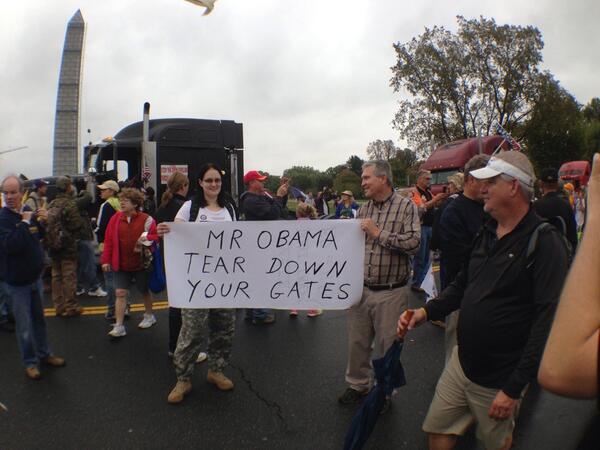
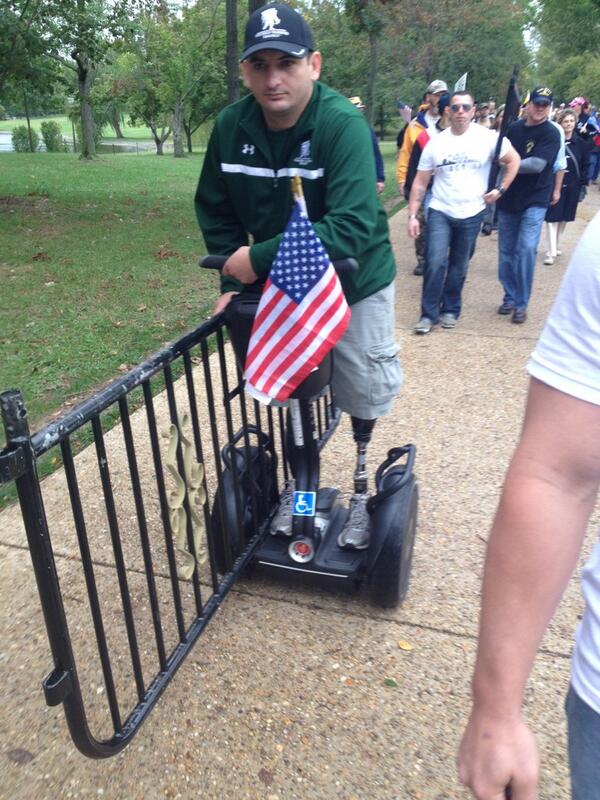

 'We Are Marching to the White House': 'Million Vet March' Descends on Washington, Barricades Torn Down 871 Comments






 Posts